
AI Video Production in 2026: Where It Works (and Where It Doesn't)
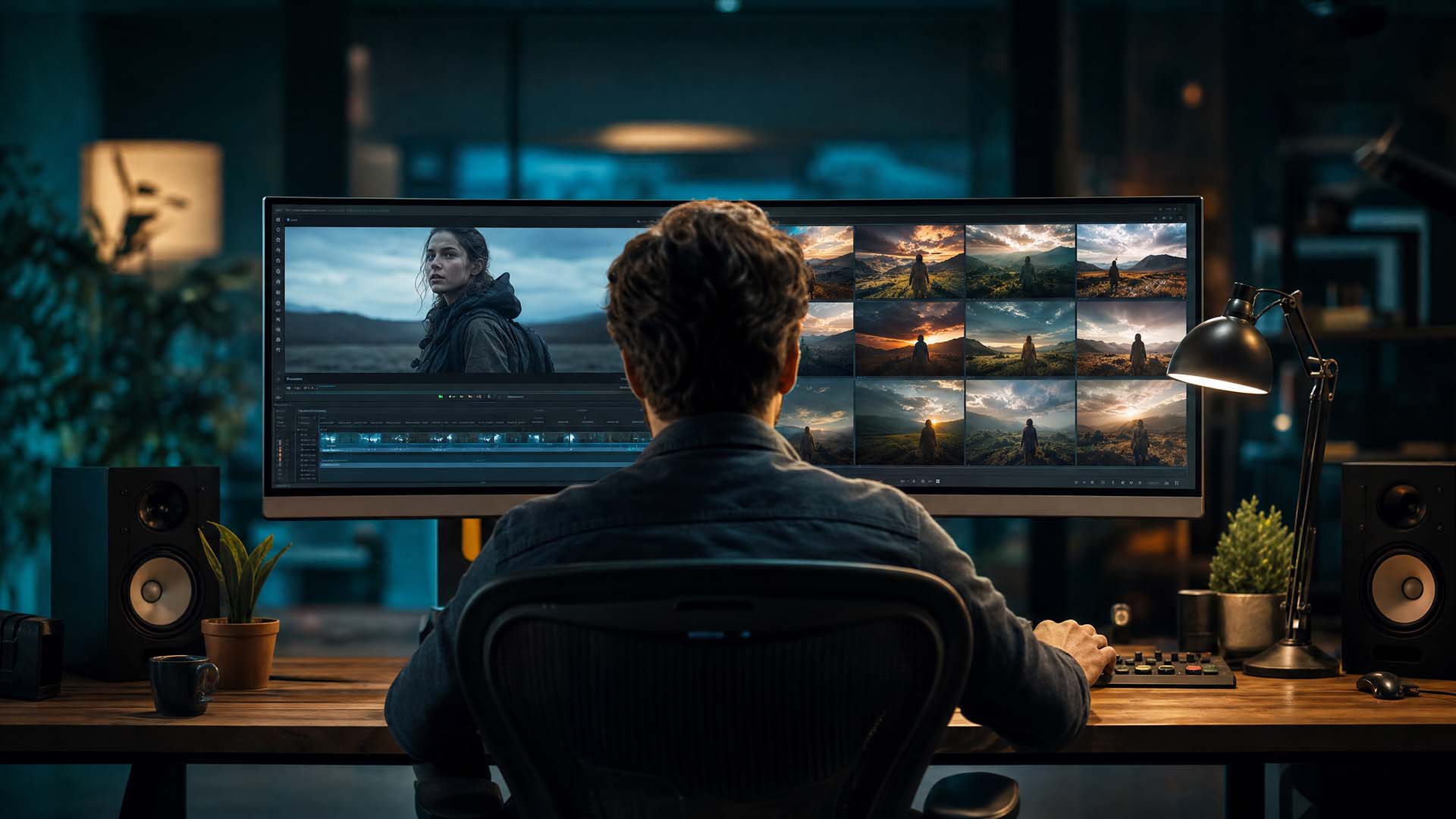

The Future of Video Production Isn't What You Think It Is
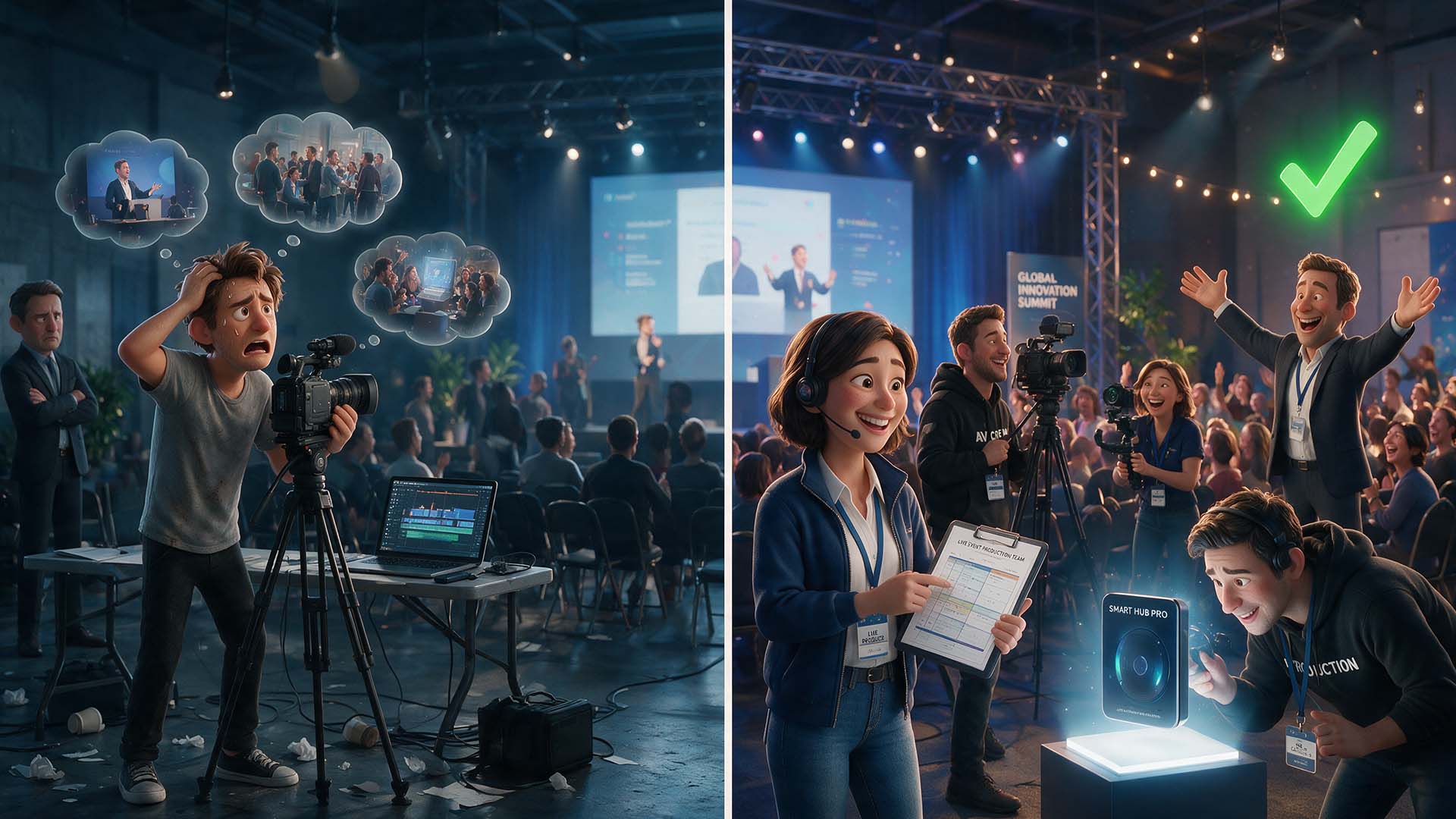
Six months ago, a client walked into our studio with a familiar problem: they needed social media videos fast, testing different messaging angles across platforms, but their budget was tightening. The old answer was simple. Film once, edit multiple times, deliver in four weeks. The new answer is different. Film once, generate variations with AI, deliver in days.
That conversation has become the soundtrack of 2026 in video production. It's not about whether AI is coming. It's already here. The real conversation now is what it means for the work itself, for the teams that do it, and for the companies trying to figure out if jumping on it makes sense for their brand.
The future of video production isn't a future where robots replace editors. It's messier, more interesting, and more pragmatic than that. It's a future where creative teams are already splitting their work into two buckets: what AI is genuinely better at doing, and what it will probably never do well. And the winners right now are the ones figuring out where those lines actually are, not the ones pretending the lines don't exist.
What Changed, and Why It Matters
Generative video technology has moved fast enough that it's stopped being a curiosity and started being a budget line item. That matters. When a client asks about AI video production now, they're not asking because it's trendy. They're asking because their CFO is asking. Their competitor's already done it. They need to produce more content per dollar and move faster than last quarter.
This isn't small-budget stuff either. Mid-market brands, agencies, corporate communications teams. They're all exploring the same question: what can AI handle so we can spend our human capital on the work that actually needs it?
We saw this play out directly with the Founders Invitational project this year. The client needed a promotional campaign fast, with multiple cut variations for different social platforms. Product shots, testimonial clips, event footage, all of it needing to work across Instagram, TikTok, YouTube, and LinkedIn. Traditionally, that's a week of shooting plus three weeks of variations and platform optimisation. Instead, we shot once, used AI for rapid iteration on edits, VFX, and platform-specific formatting, and delivered everything in ten days. The creative direction came from us. The execution time collapsed because AI handled the rendering, the variations, the frame-by-frame tweaks that usually eat production days.
Did it feel like cheating? Not when the client saw the results. Did it feel efficient? Absolutely.
The Authenticity Question Everyone Won't Stop Asking
Here's the thing nobody says but everybody thinks: if we use AI, won't it feel fake?
The answer depends entirely on what you're making. That's not corporate spin. That's what we've learned from two years of watching clients test this.
For explainer videos, social content, product demos, internal communications, rapid A/B testing? Audiences don't care about the production method. They care if the message is clear and the production is clean. AI handles both of those things well. You get variations in days instead of weeks. You test messaging faster. You move quicker. That's the win.
For brand films, customer testimonials, anything that lives on authentic human storytelling? AI is the wrong tool. Period. Your audience can feel when something was generated versus captured. Brand films need emotional texture that comes from real performances, real locations, real moments. When we worked with the John Monash Foundation on their recruitment and education content, the testimonials from educators had to feel genuine because they were genuinely important. AI variation made sense for some of the explainer sequences. It made zero sense for the interview footage. We shot that human, we kept that human, and it worked because the authenticity was the whole point.
This is where a lot of the fear around AI video dissolves in practice: the jobs that relied on authenticity aren't going anywhere. The jobs that relied on production speed, iteration cycles, and labor-intensive rendering are changing shape. That's not the end of creativity. It's a reallocation of it.
Where the Real Shift Is Happening
The future of video production is splitting into two workflows.
The first is high-speed, high-volume, low-uniqueness content. Social feeds, campaign variations, email assets, internal comms, product demos. This is where AI video thrives. It's where clients are already seeing tangible savings: 30 to 40 percent lower production costs, turnaround times cut in half, the ability to test three messaging angles instead of one because you're not locked into the production timeline of human labor.
The second is brand work that depends on storytelling, emotion, and specificity. Case studies with real people. Brand films that capture company culture. Testimonials from actual customers. This work is still 100 percent human-driven. AI might handle some of the technical lifting—colour grading variations, B-roll generation, asset formatting—but the core narrative belongs to the director, the producer, the people who understand what authenticity sounds like when it's filmed.
What's changing is that the teams doing this work are getting smaller and faster. A producer who used to spend a week managing rendering can now spend that week on strategy. An editor who used to handcraft every variation can now direct the AI toward what matters and focus on the nuance.
The Governance Question Nobody Talks About
There's one more thing that separates the video production shops that are thriving with AI from the ones that are struggling with it: governance.
Clients need to know what they're getting. They need to understand which parts of a video are AI-generated, how the process works, and what controls they have over the output. Transparency isn't optional. It's a requirement. The production companies winning this transition are the ones building governance into their process from the start.
That means telling clients exactly where AI fits in the workflow. It means being clear about what it can and can't do. It means not using AI as a shortcut to quality when you should be using it as a speed multiplier. And it means being willing to say no when a client asks you to use AI for something that would undermine the work.
What Stays, What Changes
Here's what won't change: strategy, concept, storytelling, and the human judgment that turns an idea into something that resonates with an audience. Those are the jobs that get harder, not easier, as technology improves. The more you can produce quickly, the more important it becomes to make sure you're producing things that actually matter.
What's changing is the production timeline and the cost structure. Video production is becoming faster, more affordable, and more iterative. That's not a threat to quality. It's an expansion of what's possible within a given budget. It's the ability to test ideas quicker. It's the capacity to produce more without proportional cost increases.
The teams that survive and thrive are the ones that understand the difference between speed and shortcuts. They're using AI to do what AI does well, and protecting the human work that actually matters. They're having honest conversations with clients about where authenticity is non-negotiable and where it's flexible.
The Conversation Now
This is where we are in 2026. Not at the point where AI replaces video production. We're at the point where it's reshaping it. Where the question isn't whether to use AI, but where, how, and why.
If you're a brand thinking about AI video production, the question isn't whether it's legit. It's which parts of your content strategy could move faster and cheaper, and which parts need to stay human-driven because the authenticity is the whole point.
That's the pragmatic future. Not dystopian, not utopian. Just different.
Ready to Explore AI Video for Your Project?
The question isn't whether AI video production makes sense. It's whether it makes sense for your specific goals, timeline, and budget.
If you're curious about how AI could work for your content strategy—whether that's rapid social testing, explainer variations, or something else entirely—let's have a conversation. We'll tell you straight about what works, what doesn't, and whether it's the right move for you.
Book a call with WVFRM and let's figure out where AI fits into your video production roadmap.

.svg)