What to expect on your video production shoot day
By Nathan Follett Founder, WVFRM
{ "@context": "https://schema.org", "@type": "FAQPage", "mainEntity": [ { "@type": "Question", "name": "What time should I arrive on shoot day?", "acceptedAnswer": { "@type": "Answer", "text": "Arrive at least 15 to 30 minutes before crew arrival. Crew typically arrives 60 to 90 minutes before filming starts. You should be there to meet them, show them where to set up, and answer any venue-related questions. Being late delays everything." } }, { "@type": "Question", "name": "How long will crew be at my location?", "acceptedAnswer": { "@type": "Answer", "text": "Plan for setup (60-90 minutes) plus filming time plus breakdown (30-45 minutes). A simple shoot might be 3 to 4 hours total. A complex day with multiple locations could be 8 to 10 hours. Ask during your pre-shoot call to get a specific timeline for your project." } }, { "@type": "Question", "name": "Can I get a copy of raw footage after the shoot?", "acceptedAnswer": { "@type": "Answer", "text": "Usually, no. Raw footage is typically archived by the production company. You get the finished edited video. If you need raw footage access, you need to negotiate it upfront in your contract. Raw footage ownership costs extra." } }, { "@type": "Question", "name": "What if something goes wrong during the shoot?", "acceptedAnswer": { "@type": "Answer", "text": "Production companies have backup plans. Multiple cameras, backup audio, backup batteries, backup lighting. If something fails, crew has a workaround ready. They do not panic. Freelancers might not have backups, which is why you notice when a problem happens. Trust your crew to handle it." } }, { "@type": "Question", "name": "Do I need to feed the crew?", "acceptedAnswer": { "@type": "Answer", "text": "Yes. For a full-day shoot, crew needs water, coffee, and lunch. It costs $50 to $100 and makes a massive difference in energy and quality of work. Hungry crew is slow crew. Fed crew is happy crew that works efficiently." } }, { "@type": "Question", "name": "Can I ask crew to reshoot something if I do not like it?", "acceptedAnswer": { "@type": "Answer", "text": "Not on shoot day. Crew will note your concern, but reshoots happen later and cost extra. Reshoots are possible but difficult because talent availability, lighting conditions, and season may have changed. It is better to get it right on the day. Let crew do multiple takes if you are uncertain." } }, { "@type": "Question", "name": "How do I look good on camera?", "acceptedAnswer": { "@type": "Answer", "text": "Wear something that feels like you (not a costume). Avoid bright white, neon, busy patterns, or shiny jewellery. Get sleep and eat breakfast beforehand. Crew will adjust lighting and positioning to make you look your best. They are professionals at this." } }, { "@type": "Question", "name": "When will I get my finished video?", "acceptedAnswer": { "@type": "Answer", "text": "Standard timeline is 2 to 3 weeks after the shoot. Rush delivery might be 1 week. Complex projects with animation or colour grading might be 4 weeks. This timeline was confirmed in your quote. If you need it faster, ask during your pre-shoot call." } } ] }
TL;DR
You have hired a videographer. Your shoot is in two weeks. Now you are wondering: what actually happens? How early do they arrive? What do I do? How long will it take? Will I be in the way?
Here is the realistic timeline, what each crew member is doing, what you should prepare, and what to expect from the moment they arrive.
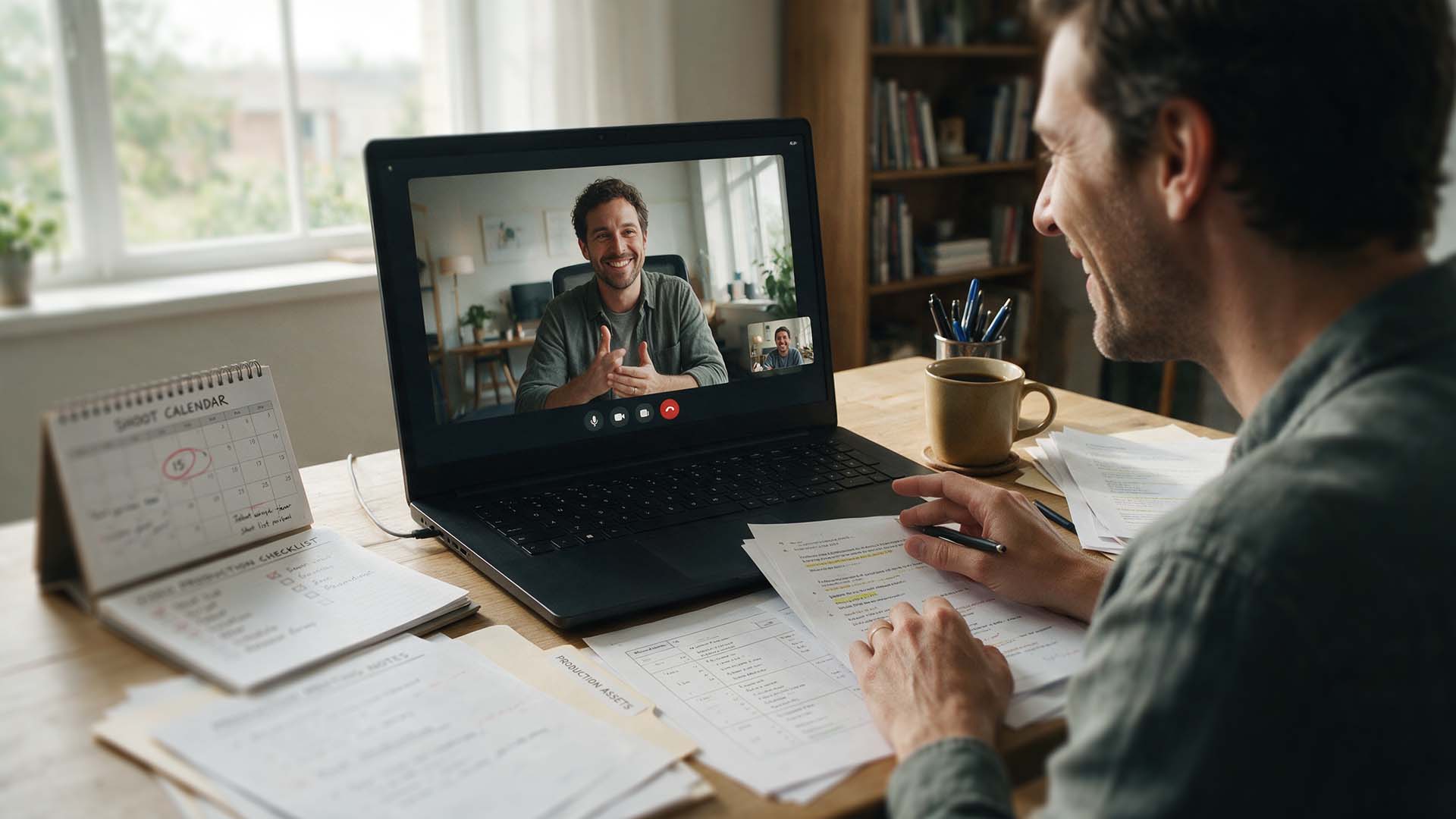
Before the shoot: the call
A week before your shoot, the production team will call. This is not optional. This call exists to make sure everything runs smoothly on the day.
During this call, confirm:
- Exact arrival time and location (including parking, entry point, where to meet)
- Access to your venue (doors, security, badge access)
- What time talent needs to be ready (if interviews are happening)
- Where crew can set up and store equipment
- Power access and internet availability (if live streaming or real-time upload is happening)
- Last-minute schedule changes
- Any surprises or variables (weather, access changes, unexpected attendees)
This call is where confusion gets solved before the shoot, not during it. If you have questions, ask them now. If you have last-minute changes, mention them now. Do not surprise the crew on shoot day.
Arrival and setup (allow 60-90 minutes)
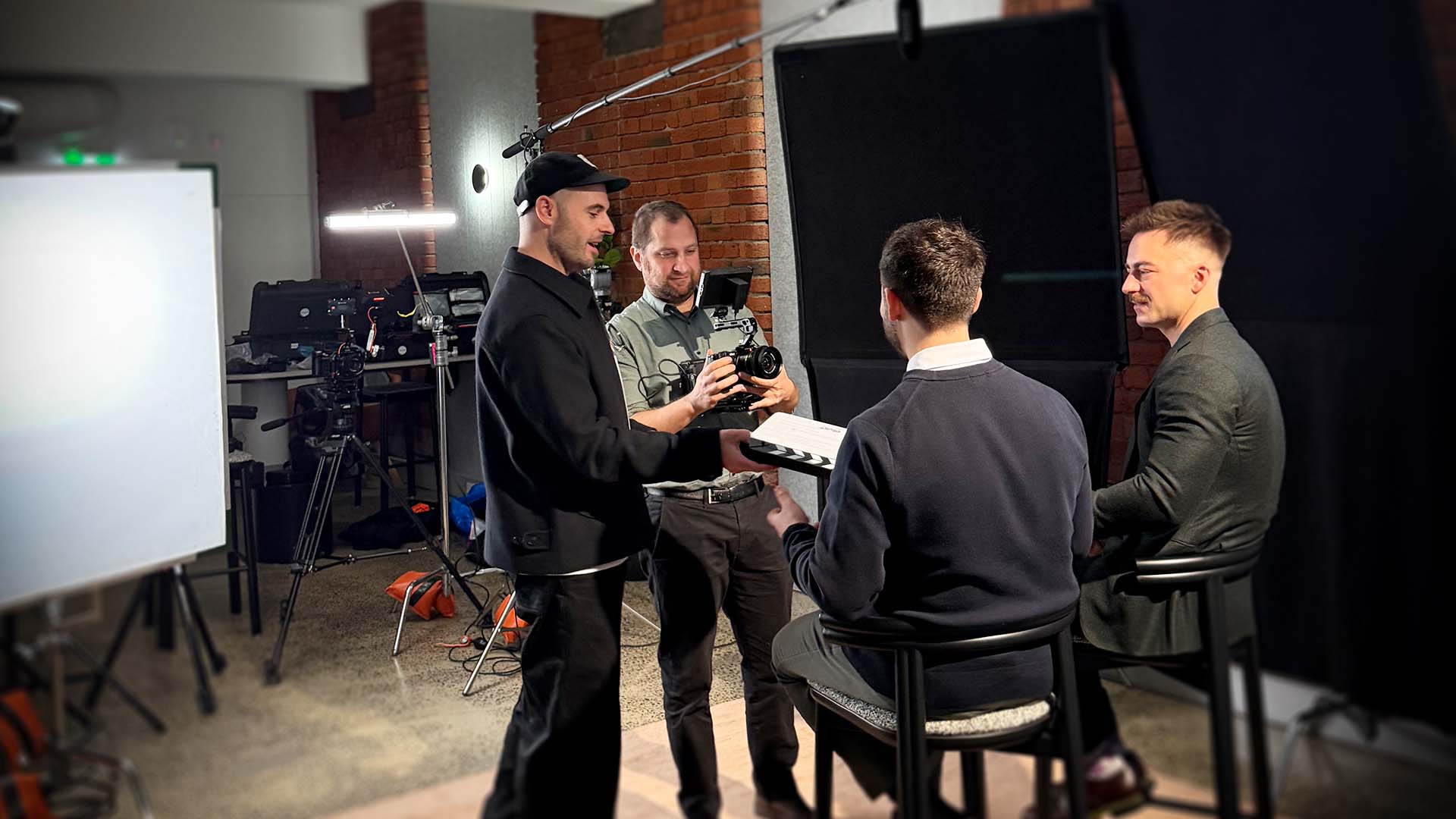
The crew arrives early. A standard crew arrives 60 to 90 minutes before you need to be filming. Here is what they are doing.
The camera operator sets up the main camera, tests focus, checks battery and storage, confirms frame composition. They are looking at your location and thinking about angles, light, and logistics.
The production assistant or focus puller is setting up lighting (if needed), running power cables, checking audio levels, setting up any backup cameras or monitors. They are making sure every technical detail is correct before rolling.
The producer (if you have one on a larger shoot) is confirming timing with talent, walking through the shoot schedule with you, answering last-minute questions, and thinking about the day holistically. They are your contact person.
What you should be doing: staying out of the way, having talent ready (or close to ready), answering any setup questions, and being available. Do not hover around the equipment. Crew needs focus, not conversation.
Actual filming (depends on your project)
A simple talking-head interview takes 30 to 45 minutes. A multi-location event with six interview subjects takes 6 to 8 hours. The timeline varies wildly.
General rule: add 50% to whatever you think it will take.
Why? Because people are not robots. An interview subject gets nervous and needs to do multiple takes. A location has unexpected glare that requires lighting adjustment. A speaker goes overtime. A transition between locations takes longer than planned.
Crew is managing all of this in real time. They are not rushing. They are being thorough, because a bad take now is a reshoot later, which costs you more money and time. Let them work.
During filming, your job is:
- Keep people on schedule
- Have water and food available (seriously, feed your crew)
- Keep the venue quiet if you are doing audio-sensitive work
- Do not interrupt the camera operator mid-take
- Do not give direction to talent unless crew asks you to
- Have answers ready for technical questions (e.g., "where should we film next?")
Common surprises:
A subject's hair looks different in natural light. Crew notices and works with it.
An interview subject is more nervous than expected and needs five takes instead of two. Crew does the takes.
The venue is noisier than expected and audio is picking up ambient sound. Crew moves to a quieter spot.
Nobody panics. Crew has handled this before. Let them adapt.
Post-filming: strike and departure
After filming is done, crew breaks down equipment. This takes 30 to 45 minutes. They are removing lights, coiling cables, backing up footage, packing cameras, and generally returning the venue to how they found it.
What you should do: stay available but do not try to help unless asked. You will slow them down. Let them pack. Answer any final questions. Confirm delivery timeline (when do you get the footage?).
The production assistant is backing up footage multiple times. This is critical. Your footage is being copied to at least two external drives before crew leaves your venue. One goes with the crew, one goes to the editor. Both are backed up again. This is why production companies cost more. This is why freelancers lose footage.
Revision and delivery timeline
Crew leaves with your footage and a timeline. Standard is 2 to 3 weeks for basic editing. If you negotiated rush delivery, it might be 1 week. If you have complex colour grading or animation, it might be 4 weeks.
During this time, you do not need to do anything. Crew is editing. You will get a first assembly to review. You watch it, note any changes, and send notes back. Crew revises. This process repeats 2 to 3 times (depending on your revision agreement). Then you get the final video.
Understand your revision limits and what is included upfront
Common mistakes clients make on shoot day
Arriving late. Crew arrives 90 minutes early. If you are not there, they cannot set up properly. Be there early.
Last-minute script changes. You decided 30 minutes before filming that you want to change what the speaker will say. This throws off the crew's timing and talent's confidence. Confirm the script a week before. Not on shoot day.
Hovering over the camera. Crew needs space to work. Stand out of the frame. Do not watch the monitor over their shoulder. Let them focus.
Not having talent ready. Interview subject is still in a meeting when crew is ready to film them. This burns through your shoot time. Have people ready.
Not feeding the crew. Hungry crew is grumpy crew is slow crew. Have water, coffee, and food. It costs $50 and makes the day smoother.
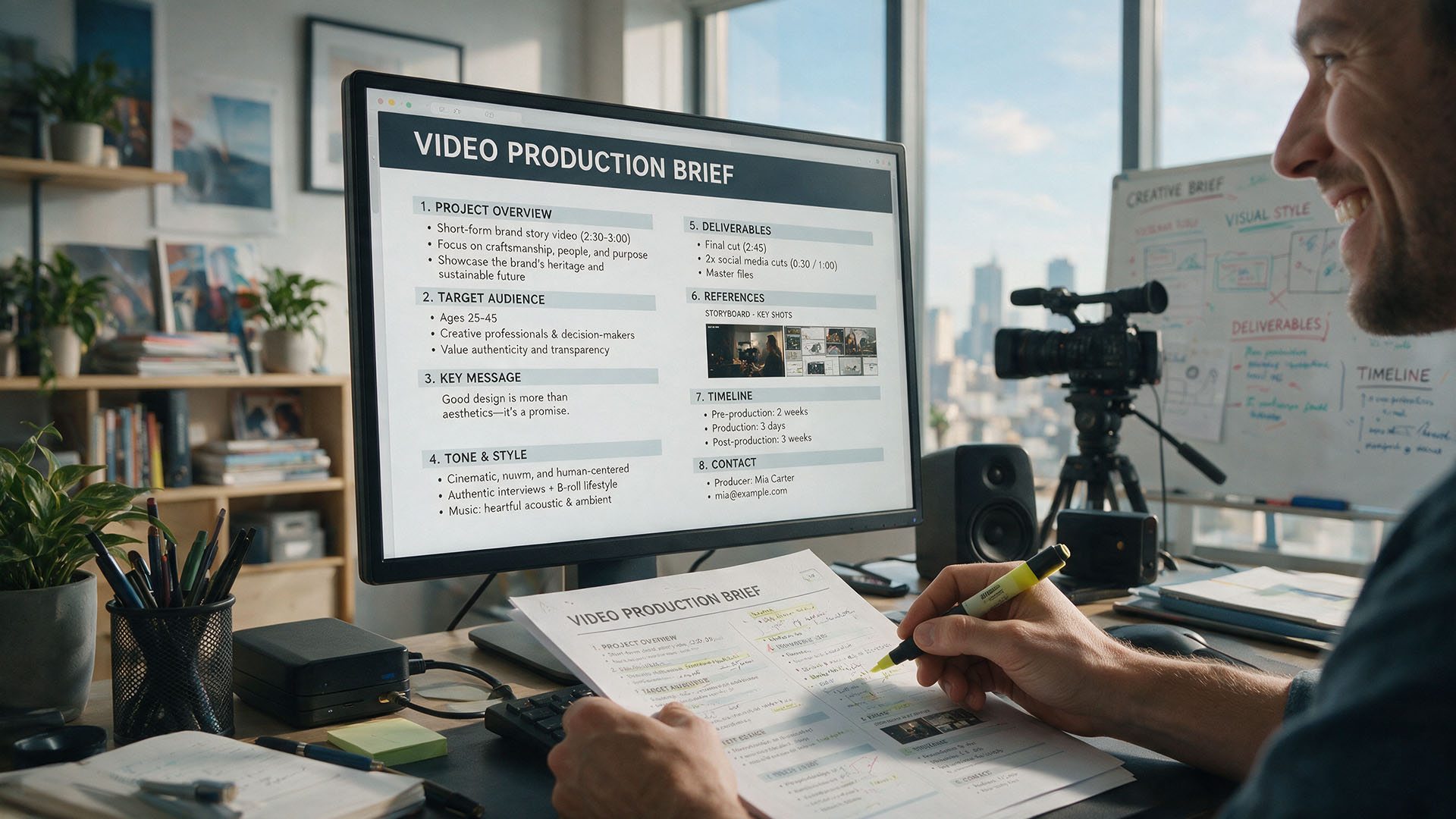
Assuming crew knows your business. Crew does not know your industry jargon, your product details, or your strategic goals. Explain the context in the pre-shoot call. In the brief. Tell them what story you are trying to tell. They will shoot better if they understand what matters.
Changing the plan mid-shoot. "Actually, can we also film over there?" Sure, but now you are adding 30 minutes and pushing back everything else. If something new comes up, ask crew. Do not just tell them.
Not having backup power or internet. Crew needs to charge batteries and back up footage. Make sure power access is real (not just "there is probably an outlet somewhere"). Make sure you have internet or a place to upload files.
What crew will handle (you do not need to)
- Lighting. They handle it. You do not need to buy lights or arrange the room. They work with what you have.
- Audio. They will mic up speakers and manage sound. Your job is to tell them if there is background noise they should know about.
- Timing. They are watching the clock and managing the schedule. If they say "we need to wrap in 5 minutes," trust them.
- Technical problems. Camera fails, light burns out, audio cuts out. Crew has backups and solutions. They do not panic and neither should you.
- Talent direction. Crew can direct basic performance ("try that again, a bit slower"). Complex directing should happen before shoot day, not during.
Crew roles explained
Camera operator: The person holding or positioning the camera. They are framing your shots, managing focus, and thinking about composition. They are the visual storyteller.
Focus puller (on larger shoots): Manages focus during filming so the camera operator can concentrate on framing and movement. On solo freelancer shoots, one person does both jobs (and neither perfectly).
Audio specialist: Handles microphones, records clean sound, manages audio levels. If you care about how your video sounds, this person matters.
Production assistant: Manages logistics, helps with lighting, runs cables, assists with transitions, keeps the day organised. They are the crew's workhorse.
Producer: Manages the client interaction, confirms timing, solves problems, keeps the shoot on schedule. They are your point of contact.
What to wear / how to look on camera
If you are not being filmed, wear whatever is comfortable. Jeans, t-shirt, sneakers. You are not the talent.
If you ARE being filmed (interviews, talking head, presenter role):
- Avoid bright white or neon colours
- Avoid busy patterns (thin stripes can flicker on camera)
- Avoid shiny jewellery that creates glare
- Wear something that feels like you (crew will adjust lighting/wardrobe if needed)
- Get a good night's sleep before (dark circles show more on camera than in person)
- Eat a normal breakfast (do not show up hungry or over-caffeinated)
Crew will tell you if something does not work. They are not judging. They are solving for camera.
The shoot day checklist
One week before:
- Confirm the pre-shoot call
- Answer all logistics questions
- Have talent confirm availability
- Check weather (outdoor shoots)
- Prepare any assets crew needs (product samples, documents to film, etc.)
Day before:
- Confirm arrival time and location one more time
- Have power access confirmed and working
- Brief talent if they are being interviewed
Morning of:
- Arrive early
- Have water and coffee ready
- Have talent ready or on standby
- Be available for questions
- Silence your phone during filming
During filming:
- Let crew work
- Keep ambient noise down
- Do not give unsolicited direction
- Feed and hydrate everyone
- Ask questions if confused, do not guess
After filming:
- Let crew pack up
- Confirm delivery timeline
- Do not try to help with technical work
- Ask any final questions
- Say thank you (seriously, crew appreciation goes a long way)
Bringing it together
A professional video shoot is a choreographed dance. Crew has done this a hundred times. You have done it once (or never). Trust the process. Ask questions before the shoot. Then let crew do their job.
The better you prepare, the smoother the day runs. The smoother the day runs, the better your footage looks.
Learn how production companies manage the entire process
Not sure what to expect? Get in touch before your shoot and we will walk you through the entire day so you know exactly what is coming.
Frequently asked questions about video production shoots
“
Nathan FollettFounder, WVFRM
Quote builder
Try our video quote builder
Pick your video type, shoot length and extras, and see a ballpark price in a couple of minutes. No email needed.
Ready when you are
Brief us today. Get an itemised quote within 24 hours.
Send a rough idea or a full brief. We will come back with a clear scope, a fixed price and a plan for your shoot.
15+
years filming
100+
brands
2,000+
videos
Nathan FollettFounder, WVFRM, Fitzroy studio